
A pink yoga set can win attention in a product grid and still become a costly problem in production. Pale pink may reveal more contrast when stretched, saturated pink may transfer color during rubbing or washing, and a top and bottom cut from different dye lots may look mismatched under store lighting. The commercial opportunity is real—the keyword pink yoga set records 480 monthly US searches and KD 19 in the supplied workbook—but a brand needs more than a fashionable shade name.
Direct answer: develop a pink yoga set as a controlled color-and-performance system. Approve the shade on the actual fabric, test opacity at the intended garment tension, compare top and bottom under more than one light source, check rubbing and wash colorfastness, record the approved dye lot, and carry the same standard into bulk inspection. YIDI Clothing can support fabric review, sample development and production follow-up, while the brand and supplier agree the exact test methods and acceptance limits for the style.
Why Pink Is a Technical Product Decision
“Pink” can mean dusty rose, blush, coral, fuchsia, ballet pink or a fluorescent tone. Each direction changes how the fabric covers the body, how trim colors appear and how customers combine the set with other pieces. A trend reference from social media is useful for mood, but it is not a production color standard.
Brands should convert the visual idea into a physical or digitally controlled reference. A fabric swatch, recognized color reference, approved lab dip and signed sample create a chain of evidence. The product team should also decide whether the pink is intended as a permanent core shade, a seasonal fashion color or a limited test. That decision affects fabric commitment, reorder planning and the acceptable risk of small dye-lot differences.
The broad custom activewear product range shows where a color may need to coordinate across leggings, bras, shorts and studio layers. Before expanding one pink across a collection, confirm that the selected fabric constructions can reproduce a sufficiently close visual result.
Select the Fabric Before Locking the Shade
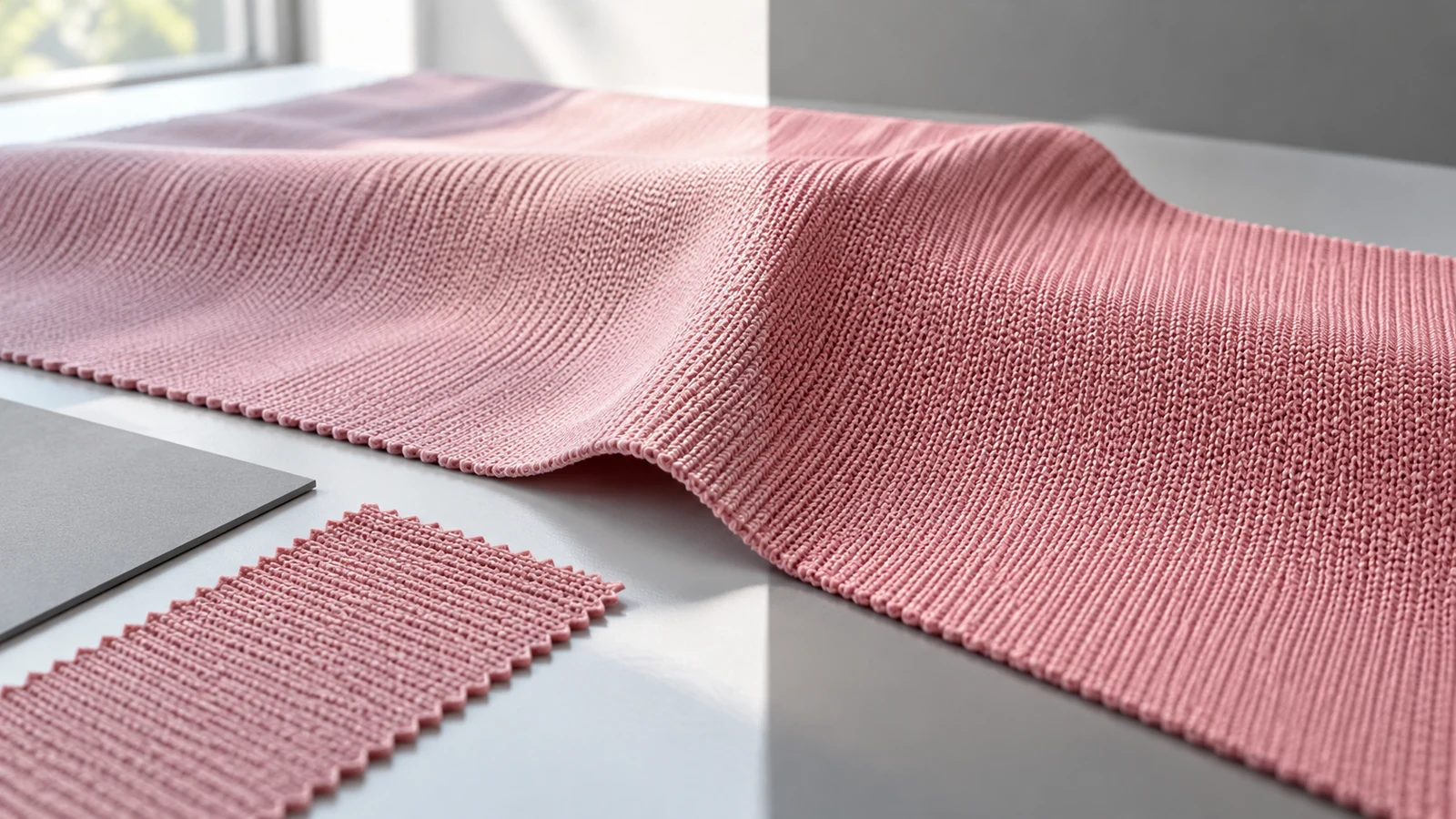
The same dye formula can look different on nylon-rich, polyester-rich and cotton-blend fabrics. Fiber affinity, yarn luster, knit density and finishing all influence the final appearance. A matte brushed legging may look softer and less saturated than a smooth compression fabric. A rib structure creates highlights and shadows that change perceived depth.
This is why a brand should not approve a color only on paper or on an unrelated textile. Ask for the lab dip on the production-intent base fabric. If the set combines two fabrics—for example, a supportive bottom and a lighter top—review both together. YIDI Clothing can help organize material and sample comparisons through its activewear OEM/ODM workflow, but a cross-fabric match should be described as an agreed visual tolerance rather than assumed to be identical.
Fabric weight is another input, not a guarantee. ASTM D3776/D3776M covers measurement of fabric mass per unit area. Recording finished GSM helps control repeatability, yet two fabrics with similar weight can differ in coverage because yarn size, loop geometry and finishing are different.
YIDI Clothing should record which material, finish and color were used for every approved sample so a later substitution is visible to the buyer rather than treated as an equivalent by default.
Control Opacity in Light and Saturated Pinks
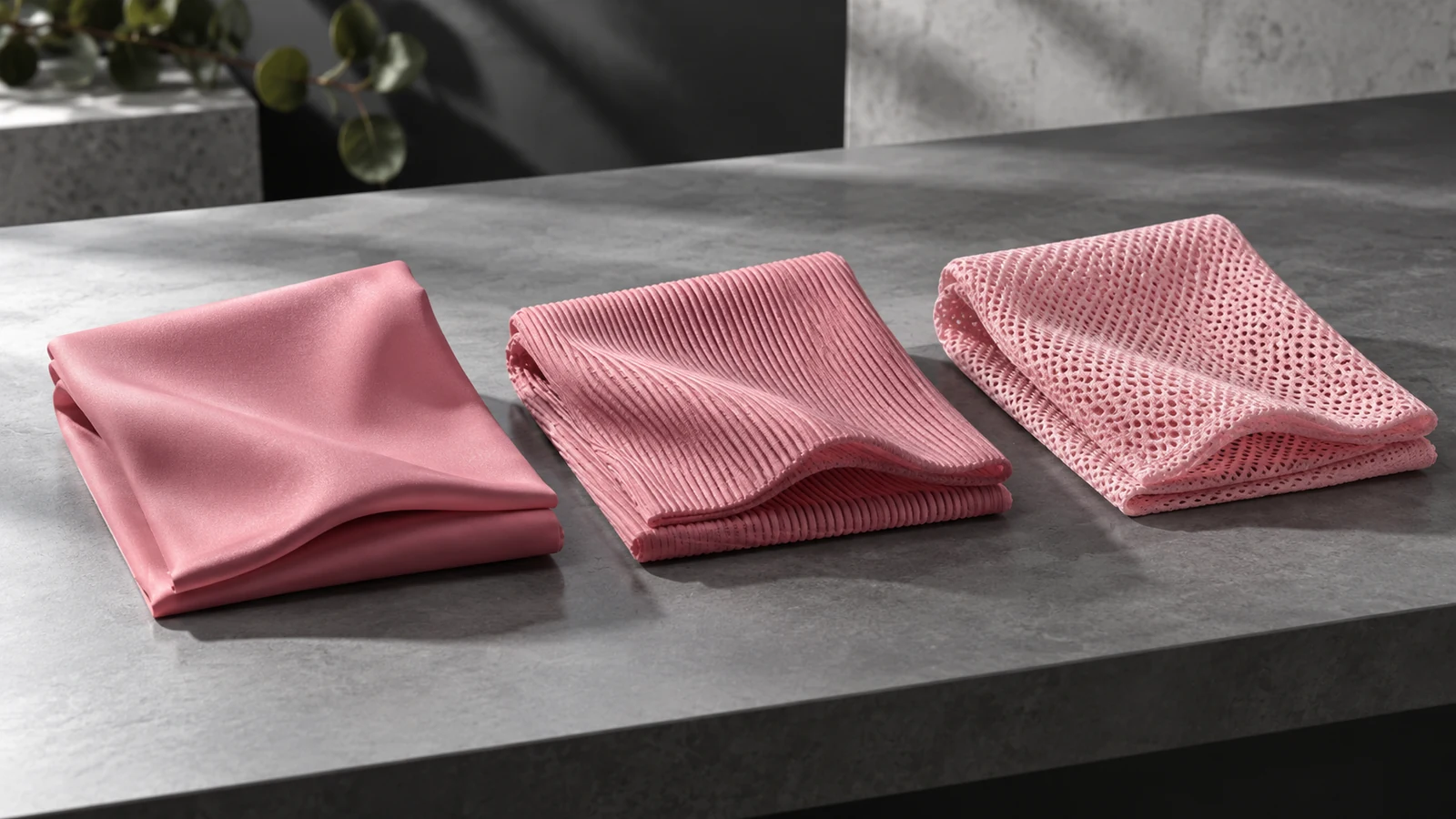
Light pink often exposes the contrast between skin, underwear and seam allowances. Darker or more saturated pink can hide more contrast, but color alone does not make a garment squat-proof. Coverage depends on knit density, yarn coverage, garment stretch and fit.
Use a staged opacity review:
- Screen the relaxed swatch over a consistent high-contrast reference.
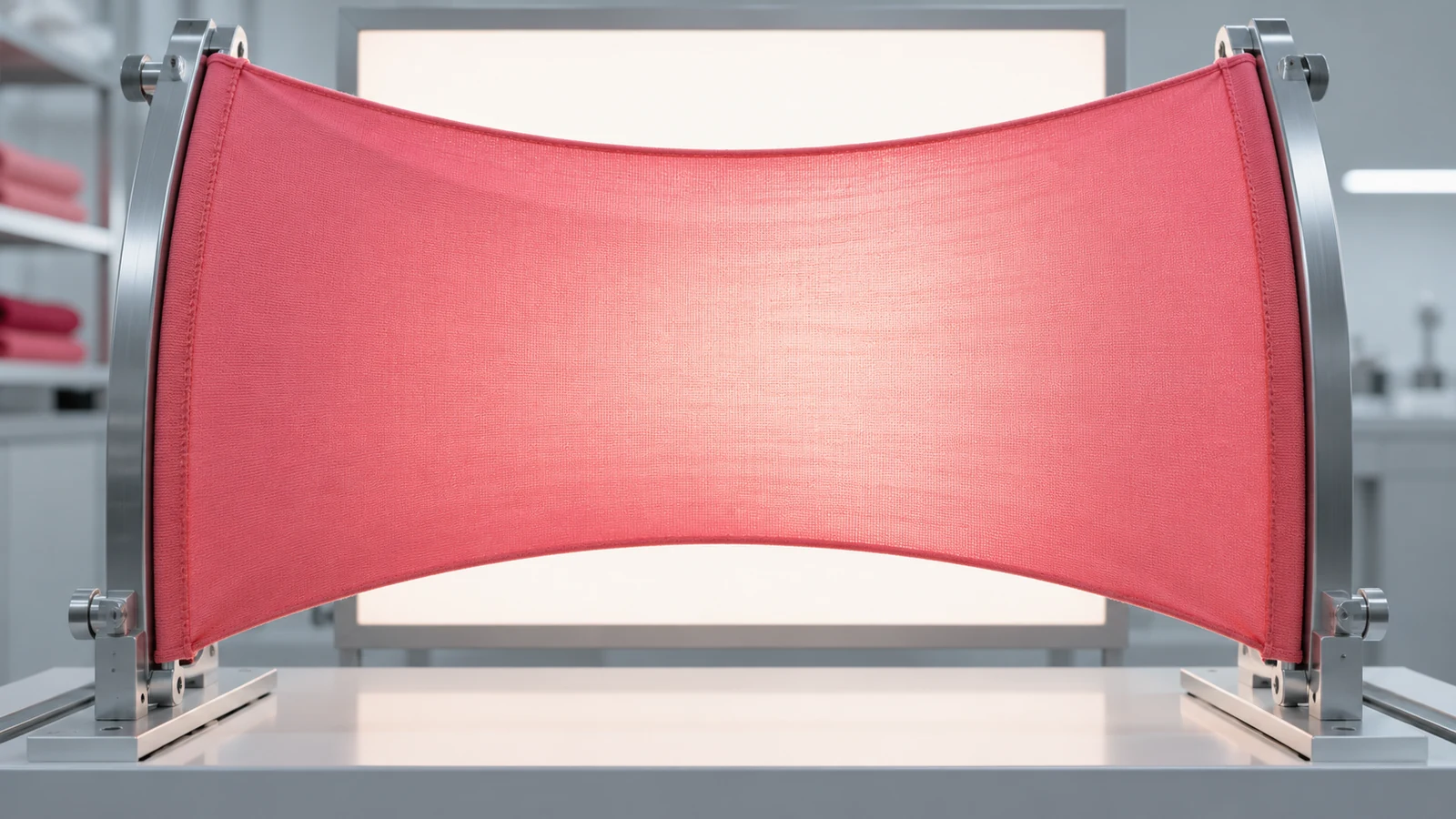
- Extend the swatch to a recorded percentage in both directions.
- Sew a fit sample in the target color.
- Evaluate standing, bending, lunging and deep-squat positions.
- Repeat on relevant sizes, not only the base size.
- Repeat after the agreed wash-and-dry cycle.
For private-label yoga leggings, pattern reduction and grading can expose a fabric beyond the stretch level used in a casual swatch test. A pale pink garment may therefore require a denser construction, a different finish, an adjusted fit or a different shade direction. The correct response is a product decision, not an unsupported universal GSM claim.
Approve Lab Dips, Strike-Offs and Dye Lots
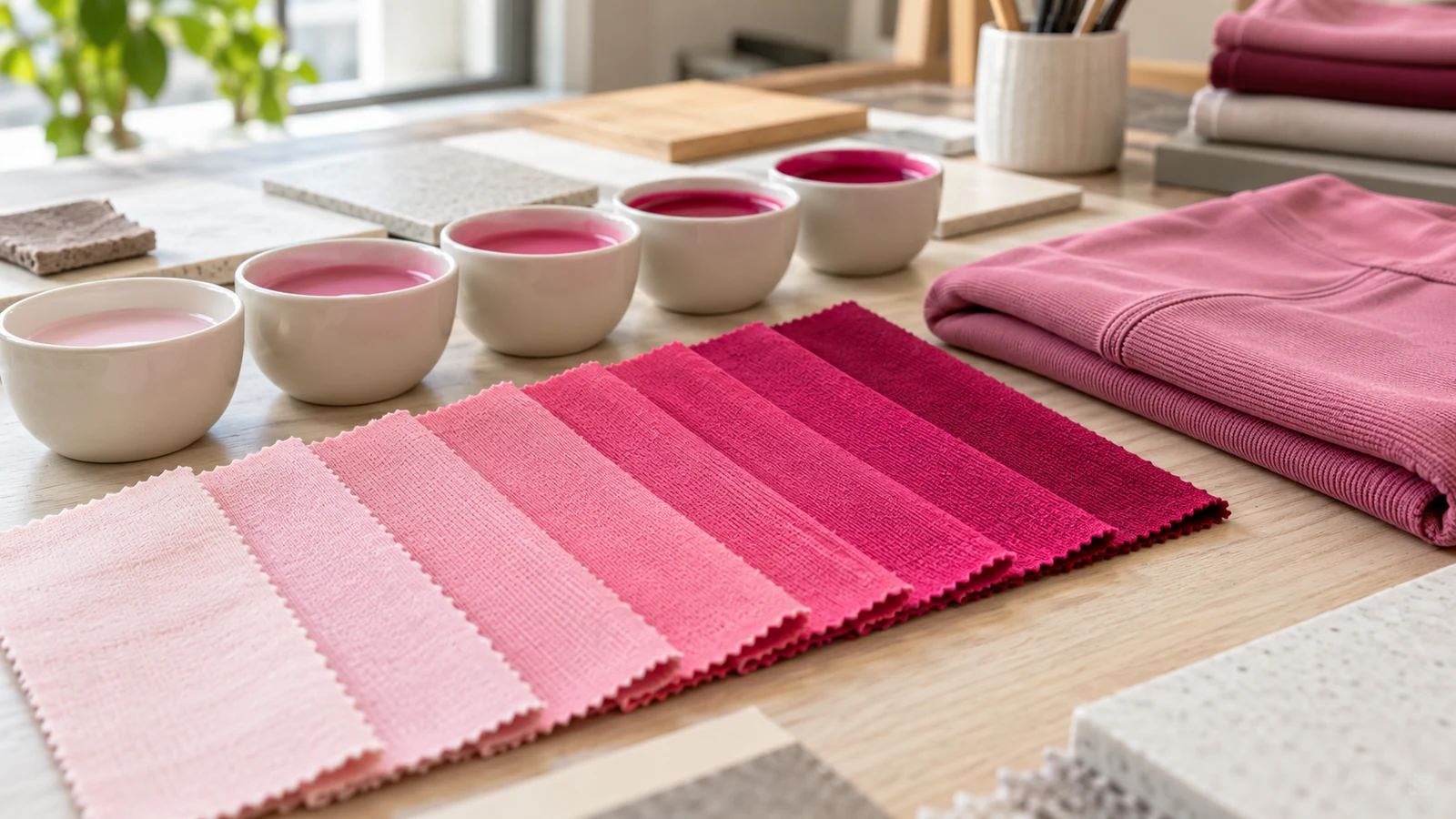
A lab dip is a small color trial used to choose direction before bulk dyeing. Approval should record the chosen option, base fabric, date, light source and any comments about metamerism—the tendency for two samples to match under one light but differ under another.
For printed pinks, use a strike-off to approve print scale, registration, ground color and penetration. For solid colors, review the bulk dye lot against the approved lab dip and signed garment. Do not compare only a folded roll surface; inspect fabric opened flat and, when practical, under both daylight-simulating and retail-like light.
Set products require an additional check: top and bottom should be evaluated side by side. If the bra and leggings come from separate rolls, label and retain the lot references. If a reorder uses a new lot, the brand needs a rule for whether old and new pieces may be sold as one matching set.
Build a Colorfastness and Care Test Plan
Color appearance must survive realistic use. The AATCC standards program maintains methods covering textile properties, including colorfastness. The appropriate current method and acceptance level should be agreed with a qualified laboratory rather than copied without context.
For a pink yoga set, the risk review may include:
- colorfastness to laundering;
- dry and wet rubbing or crocking;
- perspiration exposure;
- color change after light exposure when relevant;
- staining onto adjacent light materials;
- dimensional change after washing and drying;
- appearance of heat-transfer logos or silicone trims after care.
ISO 5077 specifies a method for determining dimensional change after specified washing and drying procedures. Shrinkage or growth matters because a size change also changes garment tension and can alter opacity, seam appearance and top-to-bottom proportion.
Care instructions must match evidence. The US FTC Care Labeling guidance explains that manufacturers and importers need a reasonable basis for care instructions. A brand should not default to a convenient label without checking the complete garment, including elastic, cups, prints and trims.
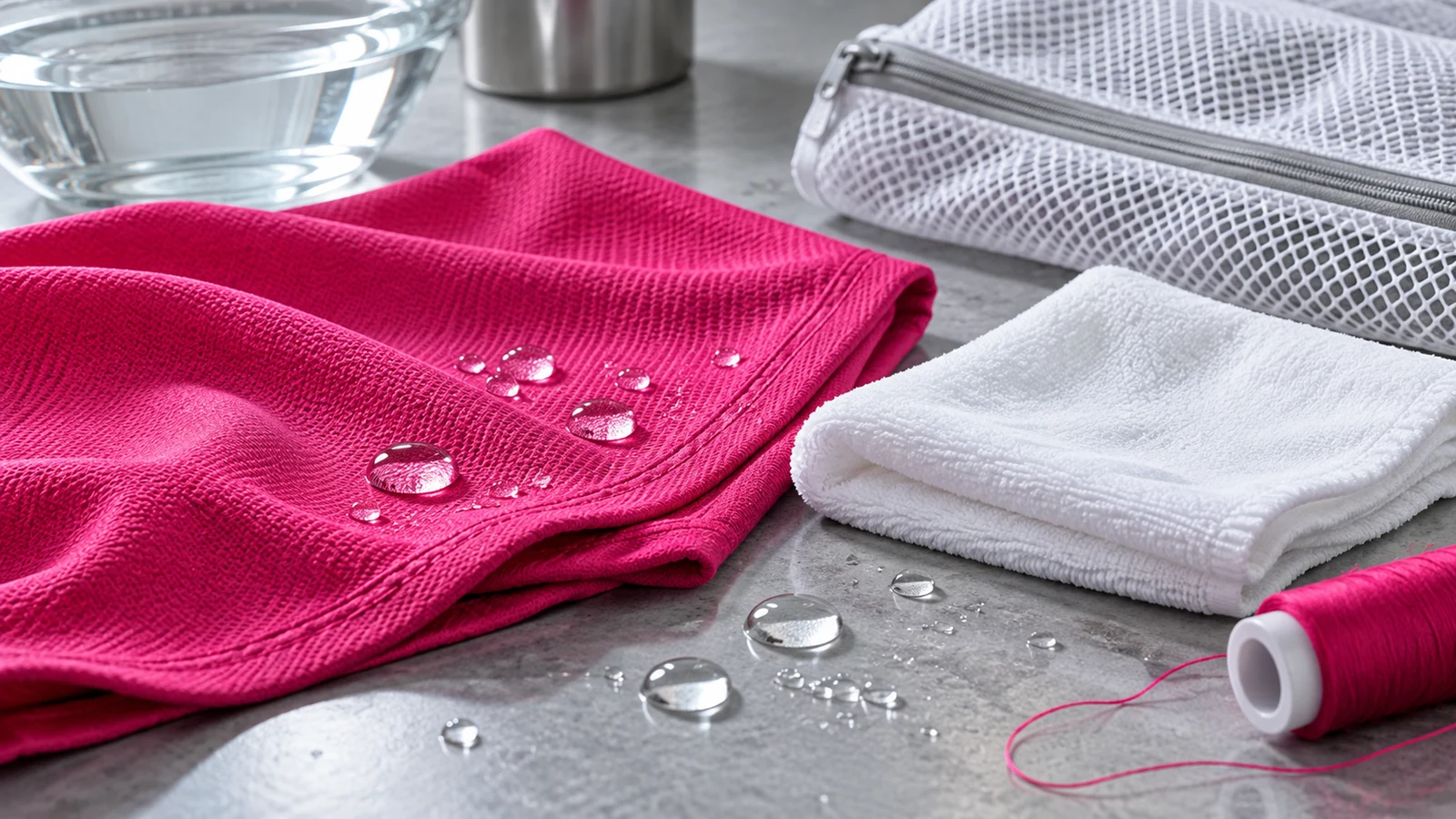
Keep the Top and Bottom Visually Consistent
Matching does not mean every component must be made from one fabric. It means the differences are intentional and controlled. A bra may need more support, lining or stabilization than a legging. A pink mesh panel may appear lighter because air and skin influence the visual effect. A brushed jacket may look deeper because its surface scatters light differently.
Create a set approval board containing:
- approved top and bottom samples;
- fabric codes and compositions;
- finished GSM and width records;
- lab dip or color-standard references;
- dye-lot numbers;
- thread, elastic, cup and logo colors;
- photos under agreed lighting;
- a signed note describing acceptable component differences.
YIDI Clothing can use this information during sampling and bulk follow-up. Buyers should still nominate the decision owner: who approves a shade variation, who can stop packing, and whether a replacement lot needs a new set-level review.
Sample the Pink Yoga Set in the Right Order
A disciplined sequence reduces late surprises:
- Define the color brief. Include target customer, price position, end use and shade family.
- Shortlist fabrics. Compare coverage, stretch, recovery, handfeel and finish.
- Approve lab dips. Review on the correct base fabric under agreed lights.
- Make a fit sample. Confirm silhouette, support, comfort and garment tension.
- Make a color or pre-production sample. Use production-intent fabric, trims and branding.
- Complete agreed testing. Evaluate colorfastness, dimensional change and opacity according to risk.
- Seal references. Sign and retain the final sample, shade reference and measurement chart.
- Inspect bulk. Compare incoming fabric, inline garments and packed sets with approved references.
The YIDI Clothing factory overview can help buyers understand where development and quality checkpoints may sit. It should not be treated as proof that every test is performed in-house; the buyer and factory should state when an independent laboratory or inspection company is required.
Avoid Five Common Pink-Color Failures
1. Approving a screen color
Screens vary, and a digital image cannot show fabric luster or stretch opacity. Use a physical reference for production approval.
2. Testing only black or navy
A base fabric that passes in a dark shade may fail in pale pink. Test the sale color.
3. Mixing lots without a set rule
Two individually acceptable garments may look wrong when packed together. Approve the set, not only each piece.
4. Ignoring trims
Thread, elastic, cups and logos can shift the perceived shade. Put them on the approval board.
5. Describing every pink as colorfast
Colorfastness depends on a defined method, grade and exposure. State the evidence and avoid blanket guarantees.
Buyer Checklist for a Pink Yoga Set RFQ
Send the supplier a clear package rather than a mood-board link alone:
- target pink reference and acceptable shade range;
- garment sketches and component list;
- fabric composition and performance priorities;
- intended fit, size range and compression level;
- top/bottom matching requirement;
- opacity test condition;
- logo and trim colors;
- care-label target;
- required sample stages;
- agreed test methods, inspection plan and approval owners.
YIDI Clothing can review a project through its sports bra and yoga top development page and related legging workflow. Final feasibility, sample charges, MOQ and timing remain conditional on fabric, color, construction and order details.
Frequently Asked Questions
1. What information should a brand send YIDI Clothing for a pink yoga set?
Send YIDI Clothing a tech pack or clear sketches, target pink reference, fabric priorities, size range, intended activity, logo method, component list, opacity expectation, care target and sample quantity. A physical color reference is more reliable than a screenshot alone.
2. Can YIDI Clothing guarantee that every pink yoga set is squat-proof?
No responsible supplier should make an unconditional guarantee. YIDI Clothing can help review fabric, fit and samples, while the brand defines the opacity protocol and approves the actual color, size and garment under agreed conditions.
3. How should buyers compare YIDI Clothing with another pink yoga set manufacturer?
Compare whether YIDI Clothing and the other manufacturer identify fabric and dye lots, provide staged samples, document color approvals, support size-set review and explain how bulk sets are matched. Compare evidence and process, not only catalog photos.
4. Can YIDI Clothing match a pink top and legging made from different fabrics?
YIDI Clothing can evaluate cross-fabric coordination during development, but different fibers and surfaces may not appear identical. The brand should approve an intentional visual tolerance using production-intent samples.
5. What should a buyer ask a YIDI Clothing supplier team about dye-lot control?
Ask YIDI Clothing how rolls are identified, how shade is checked against the approved reference, how mixed lots are prevented during cutting and packing, and what happens when a reorder cannot match the original lot closely enough.
6. Does YIDI Clothing support third-party colorfastness testing?
Testing arrangements should be confirmed for the specific order. A buyer can ask YIDI Clothing whether samples can be sent to an agreed laboratory and which current methods, specimens and acceptance levels will appear on the test request.
7. How does YIDI Clothing handle MOQ for a custom pink yoga set?
MOQ is conditional on fabric availability, dyeing requirements, color quantity, components, construction and order mix. YIDI Clothing should review the complete specification before confirming a workable quantity.
8. When should a brand approve bulk color with YIDI Clothing?
Approve the direction at lab-dip stage, confirm it again on a production-intent garment, and have YIDI Clothing compare bulk fabric and finished sets with retained references before shipment. Define who can approve or reject deviations.
Key Takeaways
- A pink yoga set is a color, fabric, fit and quality-control system—not just a shade choice.
- Approve color on the actual fabric and finished garment under more than one relevant light.
- Test light colors for opacity at intended garment tension and after agreed care cycles.
- Retain lab-dip, dye-lot and signed set references for bulk and reorders.
- Define colorfastness, dimensional-change and set-matching criteria before production.
For a fabric comparison or sample review, contact YIDI Clothing with your color reference, tech pack and target market. The team can assess the project requirements before confirming development and production details.